Wildlife observation ethics is the practice of watching wild animals in ways that protect their welfare, natural behavior, and habitat. Maintaining a safe, species-appropriate distance is one of its most important tools: it reduces the chance that people will cause stress, interrupt feeding or breeding, or provoke dangerous encounters. The National Park Service advises visitors to stay at least 25 yards (23 meters) from most wildlife and 100 yards (91 meters) from bears and wolves, while recognizing that local rules and species-specific guidance take precedence. This guide explains how distance is defined, how to recognize disturbance, how guidance varies among species and settings, and what observers can do when animals react.
Maintaining Safe Distance: A Core Attribute of Ethical Wildlife Observation
Safe viewing distance is the separation that lets people observe an animal without causing it to change its behavior or become exposed to avoidable risk. There is no single distance that works for every animal: the appropriate buffer depends on species, life stage, activity, habitat, terrain, and the animal’s response. The National Park Service’s commonly cited minimums—25 yards from most wildlife and 100 yards from bears and wolves—are useful starting points, not guarantees that an animal will feel undisturbed in every situation.
The ethical goal is not simply to avoid contact. An observer can disturb wildlife from farther away by blocking a route, repeatedly approaching, surrounding an animal, or causing it to stop feeding, rest, or care for young. Conversely, barriers, vehicles, or viewing blinds may allow observation without closing the physical distance. Distance therefore works together with time, noise, movement, group size, and habitat protection.
Behavioral distance and signs of disturbance
Behavioral distance is the space an animal needs to continue its normal activity without responding to an observer. Researchers distinguish concepts such as flight-initiation distance—the distance at which an animal begins to flee—and alert distance, when it notices a potential threat but has not yet fled. These thresholds vary widely, so an animal that remains in place is not necessarily comfortable; it may be vigilant, constrained by terrain, or reluctant to leave food or young.
Watch for repeated head-turning toward people, alarm calls, tense posture, interrupted feeding, hiding, crowding together, or movement away. If any of these occur, increase the distance immediately and avoid following. A useful ethical test is whether the animal can continue its activity and leave by a clear route without having to pass the observer.
Why disturbance matters
Disturbance can impose costs even when it causes no visible injury. An animal that repeatedly flees may spend energy, lose feeding time, abandon a resting place, or leave a nest or den temporarily. During breeding or migration, a small interruption can have consequences beyond the moment of observation. The National Park Service emphasizes that wildlife should not be approached, fed, or forced to move for a photograph; feeding can also alter behavior and increase dependence on people.
Distance also protects people. Wild animals may defend themselves when surprised, cornered, or approached near young or food. Keeping space, staying on designated routes, and never placing oneself between an animal and its escape path reduce the risk of a harmful encounter for both wildlife and visitors.
Applying Safe Distance Across Wildlife and Observation Settings
The general principle—give animals room and retreat when they react—applies across wildlife observation, but the practical buffer differs by species and setting. Large mammals, nesting birds, marine wildlife, and animals in heavily visited areas may require distinct approaches. Legal requirements can also vary by park, state, country, and protected area, so observers should check local rules before setting out.
Large mammals and predators
Large mammals require particular caution because their size, speed, and defensive behavior can make close encounters dangerous. The National Park Service recommends at least 100 yards from bears and wolves and at least 25 yards from most other wildlife. If an animal approaches, do not move closer for a better view; calmly create more space when it is safe, and follow the site’s species-specific instructions. Never approach a bear, wolf, elk, moose, bison, or other large animal to obtain a photograph.
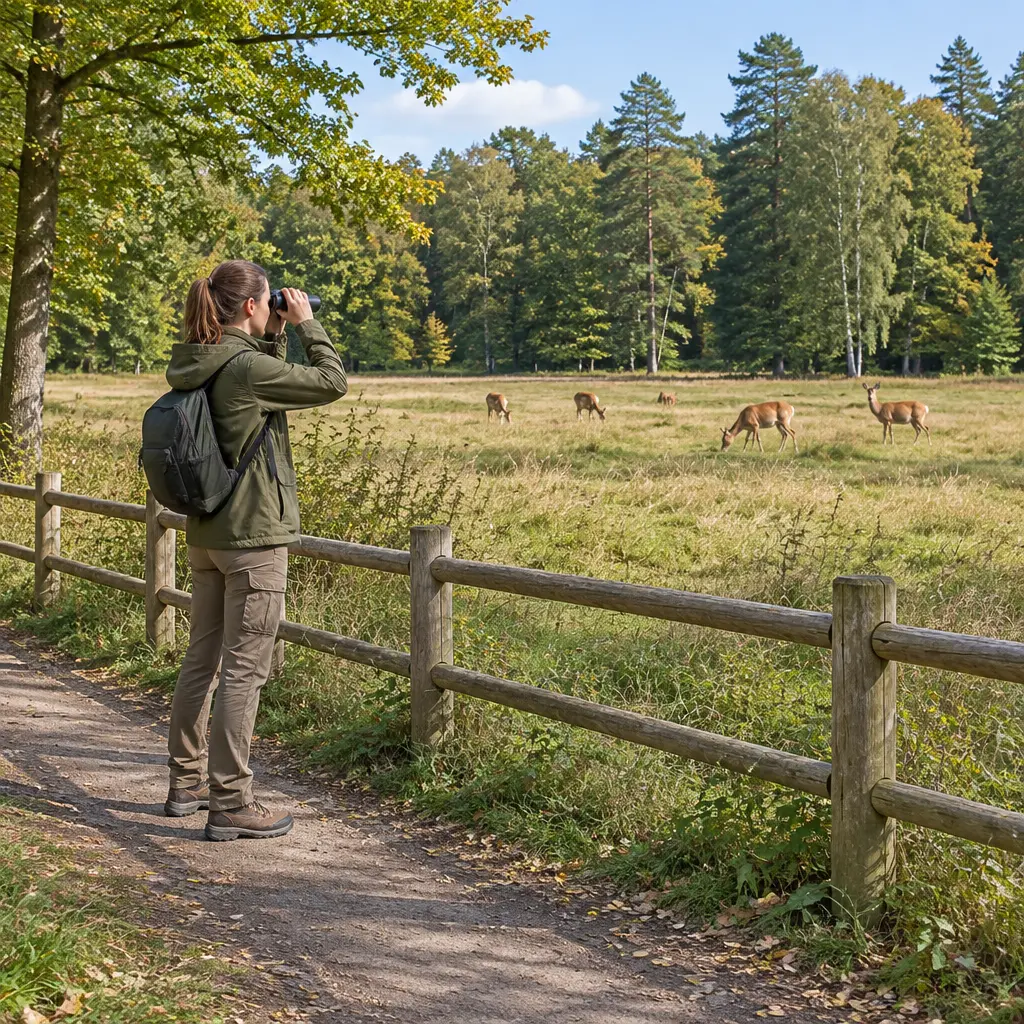
Minimum distances are not an invitation to approach until the limit is reached. An animal may need more room because it is feeding, resting, protecting young, or boxed in by a trail or vehicle. Use binoculars or a telephoto lens rather than closing the gap, and do not surround an animal or block its route.
Birds, nests, and breeding colonies
Birds may be disturbed by people near nests, roosts, or feeding areas even when the observer does not touch them. Repeated flushing can interrupt incubation or feeding, while approaching a nest can expose eggs or chicks to weather and predators. The appropriate buffer depends on the species, nesting stage, landscape, and local rules; there is no universal distance that is safe for every bird.
Observe from established trails or designated blinds, avoid entering nesting areas, and leave if adults repeatedly alarm-call, circle, or move away. Photographers should not bait birds, manipulate nests, or repeatedly approach for a desired image. These precautions are especially important at crowded colonies and sensitive breeding sites.
Marine wildlife and responsible viewing
Marine animals can be affected by boats, swimmers, drones, and people on shore. Vessel speed, approach angle, engine noise, and the animal’s ability to surface or travel all matter alongside distance. NOAA Fisheries advises people viewing marine mammals to keep at least 100 yards from whales and at least 50 yards from dolphins, porpoises, and seals; regulations and recommendations can differ by species, location, and activity, so current local guidance should be checked.
Boaters should not chase, encircle, cut across the path of, or separate animals from their group. Swimmers and kayakers should avoid pursuing marine wildlife, and anyone who sees an animal alter its behavior should back away. A responsible viewing operator follows applicable approach rules, keeps engines and noise under control, and gives animals a clear route to move away.
Viewing from trails, vehicles, and observation points
A designated trail, viewing platform, vehicle, or blind can reduce disturbance by keeping people in predictable places and away from sensitive habitat. These protections work only when visitors use them correctly: stay behind barriers, do not leave vehicles to approach wildlife, and avoid blocking roads or routes animals use. In parks, the safest viewing position is often the one that lets the animal decide whether to remain or leave.
Groups should keep noise low, avoid sudden movements, and allow others to pass without crowding an animal. Drones can disturb wildlife even when they appear distant; do not fly them near animals or in places where they are prohibited. Follow posted closures and seasonal restrictions, which may protect nesting, denning, migration, or other sensitive periods.
Using Distance, Tools, and Observation Practices to Reduce Stress
Once observers understand that safe distance is species- and context-dependent, they can make practical choices that prevent disturbance. The most effective approach combines advance planning, nonintrusive equipment, careful behavior, and a willingness to end an observation when an animal shows signs of stress.
Optics and photography without approaching
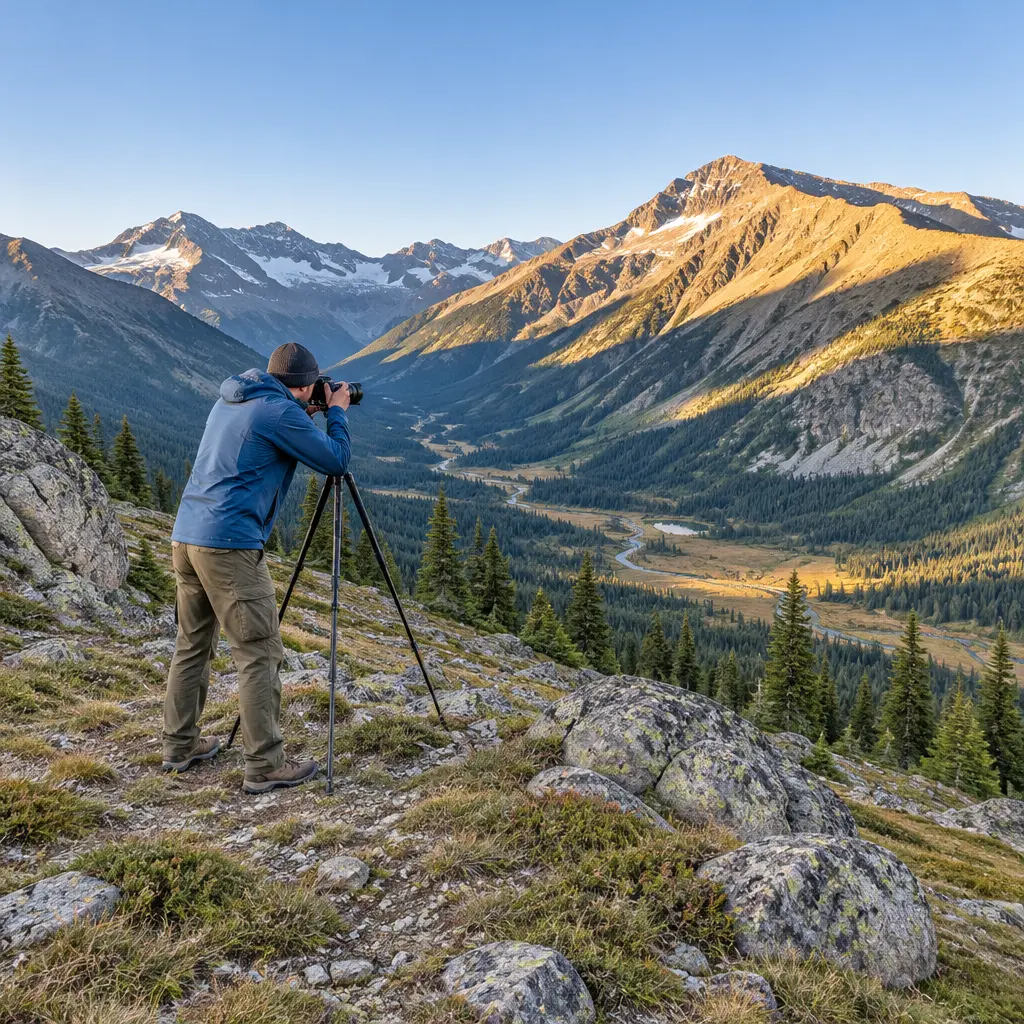
Binoculars, spotting scopes, and telephoto lenses bring details into view without requiring a closer approach. Set up before an animal arrives when possible, remain in one position, and avoid using flash where it may disturb wildlife. A photograph is not worth prompting an animal to flee, interrupting care of young, or violating a closure or approach rule.
Photographers should also consider what an image encourages others to do. Do not geotag vulnerable nesting or denning locations when sharing could attract visitors, and do not present a close encounter as harmless if it depended on approaching, baiting, or harassing the animal.
A practical distance checklist
Before and during an observation, use this checklist to make a safer decision:
- Check current park, land-manager, and species-specific rules before approaching a viewing area.
- Begin with the recommended minimum distance, then increase it if the animal appears alert, changes behavior, or lacks an escape route.
- Stay on designated trails and behind barriers; do not approach nests, dens, young, or feeding animals.
- Use optics instead of moving closer, and keep noise, sudden movement, and group size low.
- Never feed, touch, call, chase, surround, or corner wildlife.
- Leave calmly if the animal reacts, and report injured wildlife or unsafe encounters to the appropriate land manager rather than intervening yourself.
When wildlife approaches people
An animal that approaches may be habituated to people, attracted by food, or simply moving through its habitat. Do not reward the approach by feeding it or moving closer. Secure food and waste where required, give the animal an unobstructed way to leave, and follow instructions from local authorities. If the situation involves a potentially dangerous animal, prioritize official guidance over general advice.
If an animal’s behavior changes because people are present, the appropriate response is to reduce pressure—not to wait for a more dramatic sign. Retreating early helps prevent a brief encounter from becoming a repeated disturbance or a safety incident.
Conclusion: Safe Distance Supports Ethical Wildlife Observation
Maintaining a safe distance is a practical expression of wildlife observation ethics: it protects natural behavior, lowers the risk of stress and injury, and helps keep people safe. The National Park Service’s 25-yard and 100-yard guidelines provide useful minimums for many North American settings, while NOAA Fisheries offers separate viewing guidance for marine mammals. Neither replaces local rules or attention to an animal’s behavior.
Plan ahead, use trails and viewing structures, rely on optics, and retreat whenever wildlife shows signs of disturbance. Before your next outing, check the land manager’s current guidance and share responsible practices with other observers. Giving wildlife room is not a barrier to meaningful observation; it is what makes observation respectful and sustainable.
Sources: National Park Service, Viewing Wildlife, https://www.nps.gov/subjects/watchingwildlife/viewing-wildlife.htm; National Park Service, Wildlife Safety, https://www.nps.gov/subjects/watchingwildlife/wildlife-safety.htm; NOAA Fisheries, Viewing Marine Life, https://www.fisheries.noaa.gov/insight/viewing-marine-life; NOAA Fisheries, Marine Life Viewing Guidelines, https://www.fisheries.noaa.gov/topic/marine-life-viewing-guidelines